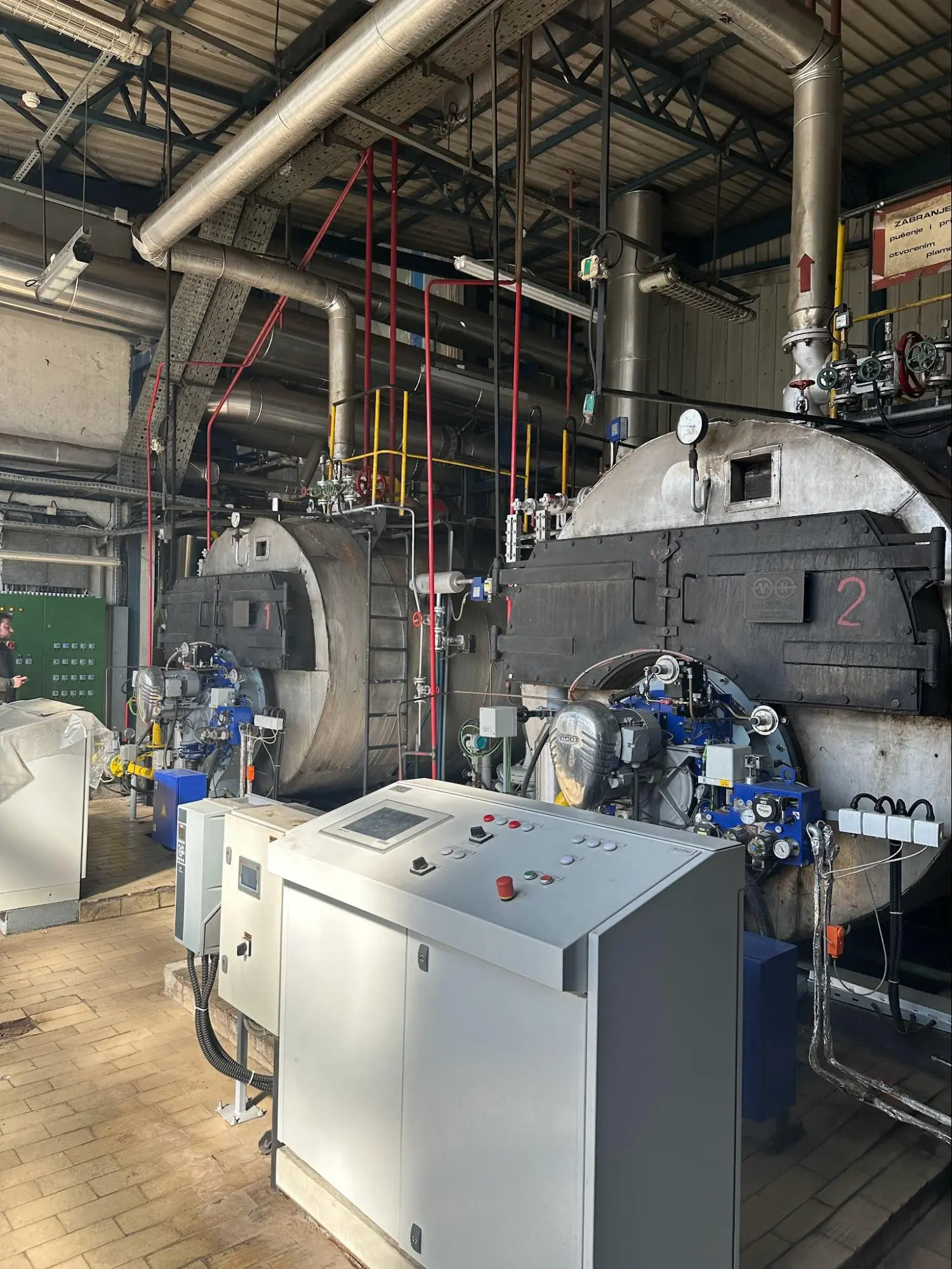
Most boiler room modernization projects do not fail because the equipment was wrong. They fail because the project structure was wrong before the first specification was written.
The failure pattern is consistent: scope defined too narrowly, interfaces left unassigned, compliance requirements discovered mid-execution, and delivery split across contractors who each assumed someone else owned the risk. By the time these gaps surface, the project is already over budget, behind schedule, or both.
The hard data backs this up. Across Serbia, 53% of district heating utilities are operating at a loss, with combined losses of EUR 22.3 million and liquidity shortages of EUR 189 million in 2024, according to Bankwatch. Chronic underinvestment and fragmented procurement are cited as primary causes. These are not isolated operational problems. They are structural problems that surface during modernization projects as cost overruns, delayed commissioning, and regulatory findings.
This article is a diagnostic tool. It is written for plant and energy managers, chief engineers, and technical procurement teams who are preparing a modernization project and want to identify structural risk before the tender goes out, not after the contractor walks in.
What this covers:
- The five failure patterns that account for most project breakdowns
- A pre-tender diagnostic checklist you can run against your own project
- A contrarian view: when full EPC integration is not the right call
- How to use delivery model selection as a risk management decision
Five Failure Patterns That Repeat Across Projects
These are not edge cases. They appear in brownfield retrofits, greenfield replacements, and partial upgrades alike. The details differ; the underlying structure is the same.
1. Scope defined by what is being replaced, not what the system needs to do
The most common starting point for a modernization project is a list of aging components. The boiler is 25 years old. The burner does not meet current NOx limits. The controls are obsolete. So the tender is written to replace those specific items.
The problem is that a boiler room is a system. Replacing the heat source without reassessing the hydraulics, the flue gas path, the automation architecture, and the fuel supply connections often produces a new boiler in an old system that cannot support it. Commissioning reveals the gaps. The client pays for change orders.
A better starting point: define the required output (capacity, efficiency, emissions, availability) and let the technical basis determine the scope. Components follow from requirements, not the other way around.
2. NOx and emissions compliance treated as a procurement item, not a design constraint
Emission limits for industrial boilers are tightening faster than the lifecycle of existing assets, forcing retrofit or replacement of equipment that is still technically and economically viable. The regulatory landscape is also fragmented: a design compliant in one jurisdiction can be non-compliant in another, and requirements are updated between tender preparation and commissioning.
When NOx compliance is treated as a box to check during procurement rather than a constraint that shapes the entire design, the result is often a burner that meets the specification on paper but fails continuous emissions monitoring in operation. This is sometimes called "paper compliance" in the industry: the documents pass, the stack does not.
In practice, achieving NOx targets below 80 mg/Nm³ (and in some EU-aligned frameworks, below 56 mg/kWh) requires integrated combustion design: burner selection, combustion air management, boiler geometry, and controls working together. No single component delivers this in isolation.
3. Interface risk left unassigned between contractors
In fragmented delivery, the engineering firm produces the design, the boiler manufacturer supplies the pressure vessel, the burner supplier installs the combustion system, and the automation contractor handles controls. Each contract has a defined scope. The interfaces between scopes belong to no one.
The most expensive problems in boiler room modernization projects occur at these interfaces: the flue gas connection between the boiler and the economizer, the control signal handoff between the burner management system and the plant DCS, the hydraulic connection between the new primary circuit and the existing distribution network. When something does not work, every contractor points to the adjacent scope.
"Handling phases separately often leads to cost overruns, delays, and communication failures." — GHD Insights
A single performance guarantee, covering capacity, efficiency, emissions, and reliability across the entire installation, eliminates this dynamic. Without it, interface risk is real and it belongs to the owner.
4. Downtime assumptions that do not survive contact with operations
Modernization projects at operating plants are almost always planned around an assumed shutdown window. The window is set early, often before detailed engineering, based on a rough estimate of what the project will require.
By the time the project reaches execution, the actual scope is larger than the estimate. Tie-in work takes longer than planned. Equipment delivery is delayed. The shutdown window cannot be extended because production or heating season cannot wait.
The result is either a compressed installation that introduces quality risk, or a partial handover that leaves the plant in a transitional state for months. Both outcomes are avoidable with a detailed execution plan developed before the tender, not after contract award.
5. Financing structure misaligned with project risk profile
Modernization projects in the public energy sector in Serbia face a specific structural problem. District heating utilities are financially constrained: 27 of 51 utilities operated at a loss in 2024, with combined liquidity shortages of EUR 189 million. Investment decisions are often driven by available financing rather than optimal project structure.
This creates a pattern where the delivery model is chosen to fit the budget rather than the risk profile. A complex brownfield retrofit that requires integrated engineering, single-source accountability, and a performance guarantee gets fragmented to reduce upfront cost. The hidden costs of coordination, change orders, and delayed commissioning exceed the apparent savings.
Pre-Tender Diagnostic: 12 Questions to Ask Before the Specification Is Written
Use this as a structured self-check before the tender document goes out. If you cannot answer a question with a specific, documented response, that gap is a project risk.
Scope and technical basis
- Is the required output defined in measurable terms: rated capacity (MW or t/h), design efficiency (%), maximum NOx (mg/Nm³), minimum availability (%)?
- Has the existing system been assessed as a whole, not just the components being replaced? (hydraulics, flue gas path, fuel supply, electrical infrastructure)
- Is the technical basis documented and signed off before the tender, or will it be developed during execution?
Compliance and regulatory
- Are the applicable emissions limits confirmed for the specific installation type, fuel, and jurisdiction? (EU IED, national transpositions, local environmental permits)
- Is the compliance verification method defined: type testing, continuous emissions monitoring (CEMS), or periodic measurement? Each has different design implications.
- Has the timeline for regulatory compliance been cross-checked against the project schedule? New limits taking effect in 2025 under EU-aligned frameworks may not align with a 24-month project.
Interface and delivery
- Is every system interface explicitly assigned to a responsible party in the contract structure? (flue gas connection, BMS-to-DCS handoff, hydraulic tie-in, electrical supply)
- If delivery is split across multiple contractors, who holds the single performance guarantee for the integrated system?
- Is there a defined integration test protocol before handover, covering the full operating envelope?
Schedule and operations
- Is the available shutdown window based on detailed engineering estimates, or on an early rough estimate?
- Has the impact on production or heating supply been modeled for both the planned shutdown and a worst-case extended outage?
- Is the commissioning and acceptance protocol defined before contract award, including who witnesses performance tests and what the pass/fail criteria are?
How to use this checklist:
A "no" or "not yet" on more than three questions in any single category is a reliable indicator of structural project risk. The questions are not a formality. They represent the gaps that become change orders, delays, and disputes.
When Full EPC Integration Is Not the Right Answer
Most content on this topic argues for integrated EPC delivery and stops there. That argument is correct for the majority of complex brownfield projects, but it is not universally correct. A balanced assessment requires acknowledging when it is not.
EPC integration adds the most value when:
- The project has high interface complexity: multiple systems, multiple contractors, and a performance outcome that depends on how they interact
- The owner has limited in-house engineering capacity to manage fragmented delivery
- The schedule is tight and a single point of accountability reduces coordination overhead
- The performance guarantee needs to cover the integrated system, not individual components
- Regulatory compliance (NOx, PED CE marking, safety instrumented systems) requires coordinated design and documentation
Fragmented delivery can be the right choice when:
- The scope is genuinely modular: a like-for-like burner replacement on a well-documented boiler with no interface changes and a verified compliance baseline
- The owner has a strong internal engineering team capable of managing interfaces, holding performance guarantees, and running acceptance testing
- The existing system has been recently assessed and the technical basis is already documented and current
- The project is a partial upgrade where one subsystem is being replaced in isolation and the integration points are fully defined
The honest version of this argument is that delivery model selection is a risk management decision, not a procurement preference. The question is not "EPC or fragmented?" The question is: "Who owns the interfaces, and are they capable of managing the risk?"
For most industrial boiler room modernization projects in the Balkans region, particularly in district heating and process industry applications where the systems are aging, the documentation is incomplete, and the regulatory environment is tightening, the answer to that question points toward integrated delivery. But the reasoning matters as much as the conclusion. An owner who understands why they are choosing a delivery model is in a stronger position to manage it.
Hidden Plant Realities That No Specification Can Fix
There is a category of project risk that does not appear in the tender documents, the scope matrix, or the risk register. It shows up during commissioning, when the new equipment is in place and the system refuses to hit the design parameters.
The cause is almost never the equipment itself.
In practice, across industrial boiler room projects in Serbia and the wider region, we encounter the same underlying conditions repeatedly:
- Maintenance instructions and standards not followed. The existing plant has been running on improvised procedures for years. Cleaning intervals are missed, calibration is overdue, and the operational baseline the project was designed against does not reflect how the plant actually runs.
- Fire pits and combustion chambers not cleaned regularly. Accumulated deposits change combustion geometry, affect heat transfer, and make it impossible to achieve rated efficiency or emissions targets regardless of what burner or boiler is installed.
- Inadequately prepared or completely untreated feed water. Water quality is one of the most common hidden causes of commissioning failure. A new boiler designed for treated water, operating on unprepared supply, will not perform to specification and will begin to deteriorate from day one.
- Key components outside the project scope left unrepaired. The modernization covers the boiler and burner. The distribution network, the expansion vessel, the pumps, and the controls upstream are not in scope. They are also not functioning correctly. The new system cannot compensate for what surrounds it.
The honest version of this: a modernization project can only deliver what the surrounding plant conditions allow. If the operational discipline, water treatment, and maintenance baseline are not in order before commissioning, the project will underperform. Not because the engineering was wrong, but because the system it was designed for does not exist in the field.
This is not a reason to delay modernization. It is a reason to include a realistic plant condition assessment in the pre-tender phase, and to define explicitly what falls outside the project boundary and who is responsible for it. An interface matrix that stops at the mechanical connections is not complete. It needs to account for operational readiness as well.
When Management Disputes a Signed-Off Plan During Assembly
This one is less discussed publicly, but it is a real and recurring source of project delay, cost overrun, and damaged working relationships.
The sequence goes like this. The technical basis is prepared. The design is reviewed. The plan is signed off by the client's engineering team. Construction begins. Then, during assembly, a plant manager who was not closely involved in the earlier phases notices something that does not match their mental model of how the system should look. They raise a concern. Work stops while the contractor defends data-backed claims that were already agreed in writing.
Sometimes the concern is legitimate and the plan genuinely needs adjustment. More often, the issue is that the signed-off documentation was not read carefully enough by everyone who has authority to stop work on site.
The consequences are consistent:
- Schedule impact. Every day of contested work during assembly is a day of delay that cannot be recovered without cost.
- Rework exposure. If the dispute is resolved in favor of a change, work already completed may need to be undone. If it is resolved in favor of the original plan, the interruption still cost time and created friction.
- Accountability erosion. When the plan is questioned mid-execution, the contractor's position weakens regardless of who is technically correct. The dynamic shifts from "executing an agreed scope" to "defending every decision in real time."
The structural fix is not more detailed drawings. It is earlier and broader stakeholder alignment before the plan is signed. Every person with authority to stop work on site should have reviewed and formally acknowledged the construction plan before the first component is installed. This is not bureaucracy. It is the cheapest form of schedule protection available.
For owners, this means including operations management in the technical review phase, not just the engineering team. For contractors, it means documenting sign-off at the right level of authority, not just the project engineer.
A construction plan that has been signed by the right people, with the right level of understanding, is a different document from one that was signed because it was the next step in the process.
What to Do Before the Tender Goes Out
The pre-tender phase is where modernization projects are won or lost. Not in the contractor selection. Not in the negotiation. In the quality of the technical basis, the completeness of the scope, and the clarity of the interface assignments before the first offer is received.
Three actions that reduce structural project risk before tender:
- Run a full system assessment, not a component audit. Document the existing system as it actually operates: capacity, efficiency, emissions baseline, interface points, and known deficiencies. This is the foundation for a defensible scope.
- Confirm the regulatory compliance requirements in writing. Identify the applicable limits, the verification method, and the effective dates. Cross-check against your project schedule. If the limits change during execution, you need to know that before the contract is signed.
- Define interface ownership in the contract structure. Every handoff point between systems and contractors must be explicitly assigned. If it is not in the contract, it belongs to the owner by default.
If you have run through the diagnostic checklist above and identified gaps, the next step is a structured technical review before the tender is issued. That review should cover scope completeness, interface mapping, compliance requirements, and delivery model selection.
Planning a boiler room modernization?
MIK Projekt runs pre-tender technical reviews for boiler room modernization projects. We assess the scope, identify interface risk, and help structure the delivery model before the tender goes out.
Frequently asked questions
Why do boiler room modernization projects fail most often?
They usually fail because the project structure is weak before tender, not because one component is defective. The most common issues are an incomplete baseline, unclear compliance targets, unassigned interface risk, unrealistic outage windows, and procurement that focuses on equipment price instead of system performance.
What hidden plant conditions can derail a modernization project?
Poor maintenance discipline, unclean fire pits, untreated feed water, and unresolved components outside the project scope can make it impossible to reach design parameters. A modernization project cannot correct a plant that is already operating outside basic technical and operational conditions.
What is the biggest risk in a brownfield boiler room retrofit?
Interface risk is usually the biggest problem. In brownfield work, mechanical, electrical, automation, civil, and commissioning scopes overlap. If no one owns the handoffs, small gaps turn into delays, change orders, and failed acceptance tests.
When is EPC delivery the better choice?
EPC tends to fit complex brownfield projects where schedule certainty, system integration, and a single performance guarantee matter most. It is especially useful when the owner does not have strong in-house engineering capacity to manage multiple contractors and interfaces.
Can split delivery ever work for boiler room modernization?
Yes, but only when the scope is narrow, the plant baseline is well documented, and the owner has strong internal engineering to manage interfaces and testing. A simple burner replacement on a stable system is very different from a multi-system retrofit.
What should a pre-tender checklist cover?
It should confirm the baseline condition, emissions target, outage window, interface ownership, test criteria, and post-commissioning support. If those answers are vague before tender, the project is not truly ready for procurement.
What happens when management disputes a signed-off plan during assembly?
Work stops, the schedule slips, and the contractor has to defend data-backed claims against a plan that was already agreed. The result is usually delay, rework, and a weaker delivery relationship unless the issue is resolved quickly and formally.